


Cart
0
The Cuisine of Hotel New Grand, Where Japanese Western Food Began
Facing Yamashita Park in Yokohama stands
Hotel New Grand.
Opened in 1927, this historic hotel is more than an elegant landmark.
It is widely regarded as the birthplace of Japanese Western-style cuisine—
a place where foreign food was not simply imported, but thoughtfully transformed.
Here, cooking became an act of cultural


Not Imitation, but Adaptation
The chefs at Hotel New Grand were never interested in copying European cuisine as-is.
Instead, they asked a different question:
How should this taste for Japanese guests?
The answer was restraint, balance, and comfort.
That philosophy gave birth to dishes that feel unmistakably Japanese today.
🍝 Napolitan Spaghetti

Sweet tomato ketchup, soft noodles, simple ingredients.
Napolitan may feel nostalgic now, but its origins trace back to this hotel.
After World War II, pasta introduced by American soldiers was adapted
to local tastes—gentler, sweeter, and familiar.
It is not dramatic food.
That is precisely why it endures.
🧀 Seafood

Butter rice topped with creamy white sauce and seafood,
baked slowly until the surface turns golden.
Created here for guests who needed a gentle, nourishing meal,
doria reflects a uniquely Japanese sense of hospitality.
Comfort comes first. Elegance follows quietly.
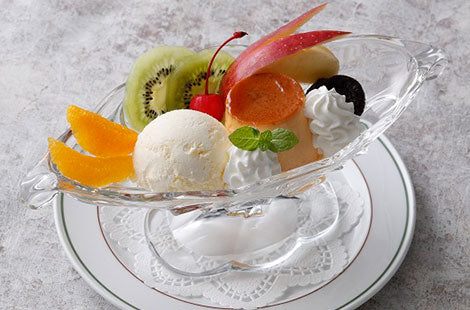
🍮 Pudding à la

Firm custard, seasonal fruit, restrained sweetness.
No trends, no reinvention—just balance.
With each spoonful, it feels as if different eras overlap:
past and present sharing the same plate.
Why These Dishes Never Feel Old
Nearly a century later, these recipes remain unchanged.
The reason is simple:
- Trends were never the goal
- Flavors were built with intention
- Every dish had a clear purpose
Because of that, they do not age.
They settle into memory instead.
A Place to Taste History
Dining at Hotel New Grand is not about luxury in the modern sense.
It is about continuity—
the quiet preservation of taste, care, and craftsmanship.
If you visit Yokohama, take the time to sit down and eat here.
You won’t just be having a meal.
You’ll be tasting a chapter of Japan’s culinary history.
